How to Fix Missing Info in an MLA Citation
Step-by-step guide on how to fix missing information in an MLA citation. Learn how to handle missing authors, dates, publishers, and page numbers in MLA 9.
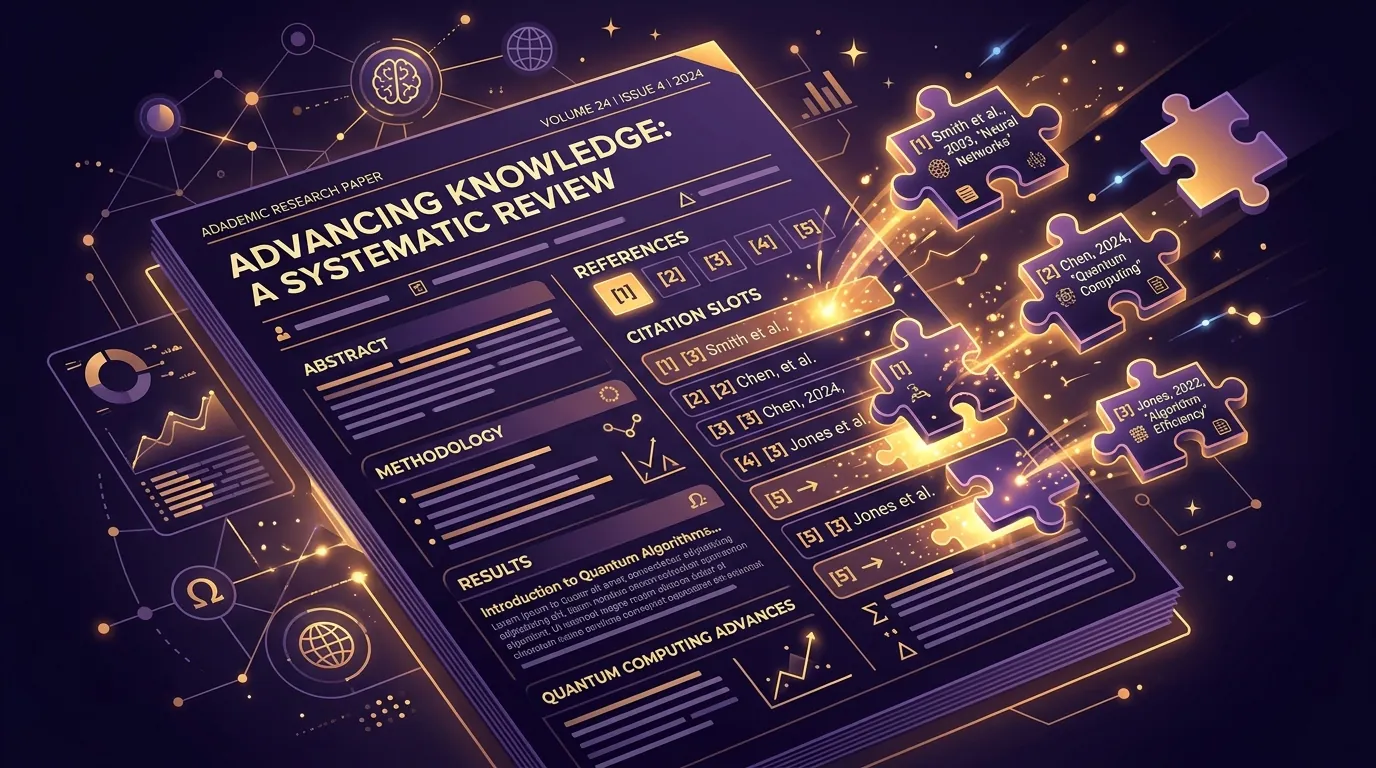
You finish your essay and feel great. Then one Works Cited entry looks strangely empty. There’s no author, no date, and no publisher. Don’t panic. Missing MLA information is very common, and most gaps are easy to fix. This guide explains how to fix missing information in an MLA citation with simple lookup methods and clear MLA 9 rules. You’ll learn to complete an MLA citation without guessing a single detail.
What Citation Details Are Most Commonly Missing From MLA References?
Web pages create the most gaps. You’ll often see a missing author, missing date, or missing publisher. Journal entries may lack a missing volume, issue, pages, or DOI. These citation data gaps usually come from thin citation metadata, not careless students.
An incomplete MLA citation isn’t always wrong, though. Some details simply don’t exist for that source. The table below shows where to start your citation information lookup for each field.
| Missing Field | Where to Look First |
|---|---|
| Missing author | Byline, page footer, About page |
| Missing title | Browser tab, page heading, PDF cover |
| Missing date | Copyright line, article header, update note |
| Missing publisher | Site footer, copyright page, publisher website |
| Missing volume, issue, or pages | Journal information page, database records |
| Missing DOI | Publisher page, academic databases |
How Can You Find Missing Author Information for a Source?
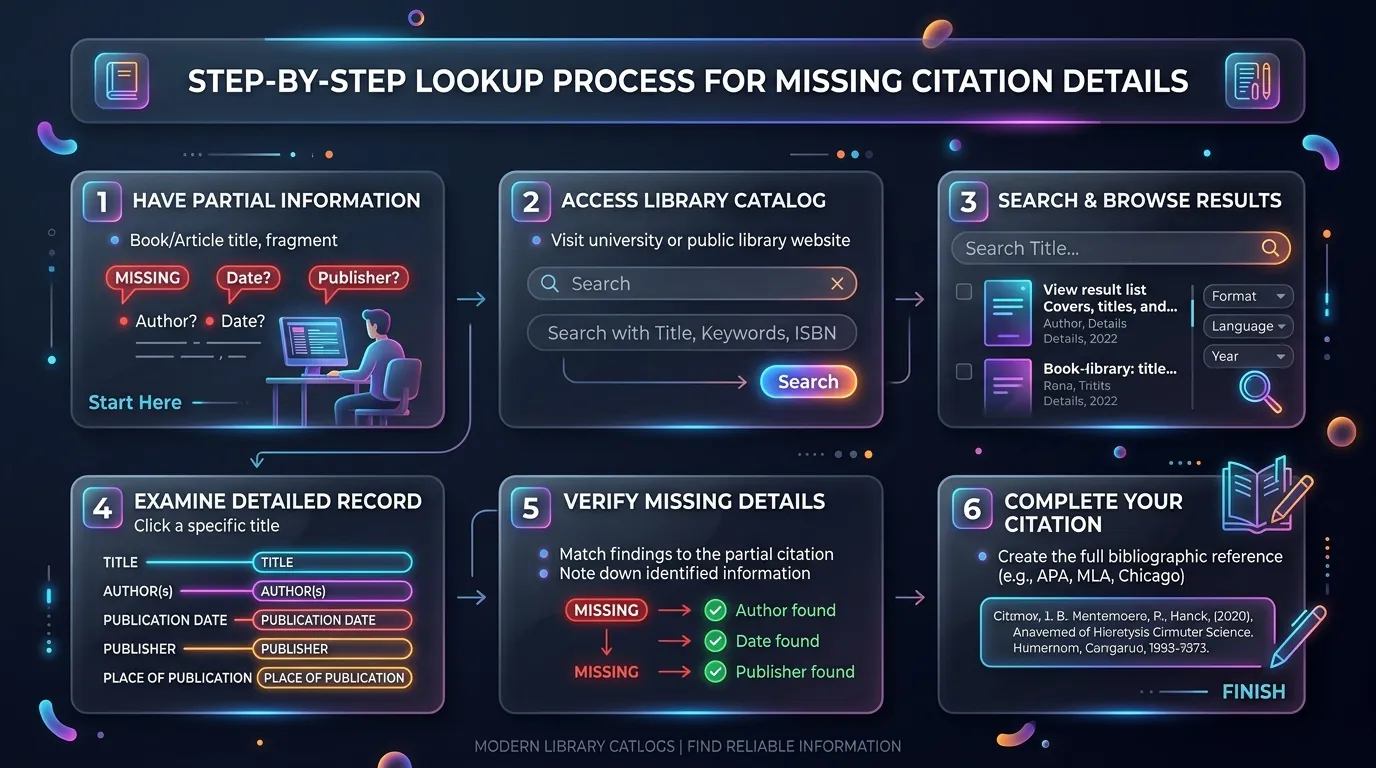
Start with the page itself. Scroll to the very top and bottom. Check the About page too. For a PDF, look at the cover and the file properties. This simple author lookup solves most cases.
Next, try the library catalog or academic databases. They store clean bibliographic information for books and articles. Sometimes the author is an organization, like a government agency. That counts as a real author. If you truly find nobody, start with the title. That’s what to do when an MLA source has no author.
How to Find Author Information for a Citation Using Library Tools
Your school library is a strong ally. Search the title in the catalog or a database like JSTOR. Database records list authors, dates, and page ranges clearly. This bibliographic lookup also helps you find publication information for MLA faster than guessing ever could.
What Should You Do When a Publication Date Cannot Be Found?
Look for a copyright line, a “published” note, or an “updated” note. News pages usually place dates under the headline. Blogs sometimes hide them near the comments. These steps help you locate publication dates quickly.
Still nothing? Leave the date out. MLA 9 doesn’t use “n.d.” Instead, add an access date at the end, like “Accessed 12 Sept. 2026.” That’s how to cite a source with no date. The access date tells readers when you viewed a page that might change.
How Do You Handle Missing Publisher or Container Details?
MLA skips the publisher in several cases. Journals, magazines, and newspapers don’t need one. You can also drop it when a website’s name matches its publisher. So a missing publisher isn’t always a problem.
The container is different. It’s the larger work that holds your source, like a website or journal. Find it in the site header or on the journal’s cover page. This is how you handle missing publisher information and fill MLA citation fields correctly.
What Alternatives Exist When a Source Has Incomplete Bibliographic Data?
Try other publication records. WorldCat lists books held by libraries around the world. Crossref can match an article title to its DOI. Web archives can show when a page first appeared. These tools support citation data recovery for incomplete source records.
What if a work has no title? Describe it instead. For example, write “Photograph of a Chicago street market.” MLA allows short descriptions for untitled works. This is a smart way to cite a source with incomplete details without inventing anything.
How Can You Verify Recovered Information Before Adding It to MLA Format?
Always confirm details in two places. Does the catalog match the publisher’s page? Does the DOI open the right article? This extra source verification protects both your grade and your credibility.
Go back to the original publication whenever you can. Reprints and summaries often change dates or titles. Careful bibliographic verification turns rough data into verified citation information you can trust.
A Quick Checklist to Verify Recovered Citation Details
Use this table before you complete an MLA Works Cited entry.
| Detail | What to Confirm |
|---|---|
| Author | Appears on the source or a trusted catalog |
| Title | Matches word for word, including subtitle |
| Date | Matches the version you actually read |
| DOI | Opens the correct page |
| Pages | Match the printed or PDF pages |
What Should You Never Guess When Completing an MLA Citation?
Never guess an author’s name. Never invent a date, page range, volume, or issue. A made-up detail is worse than a blank one. It misleads readers and can raise academic integrity concerns.
Also avoid filling in first names from memory. “J. Smith” might not be “John Smith” at all. When you can’t confirm a detail, leave it out. MLA’s flexible system allows this. Reliable source details always beat tidy-looking guesses.
How Can You Deal With Sources That Provide Conflicting Publication Details?
Sometimes a page lists two dates. One shows when it was published, and another shows an update. A book may list a first edition year and a reprint year. So which one wins?
Cite the version you actually used. If you read the updated page, use the update date. Case study: Picture a nursing student citing a 2019 health article updated in 2025. The newer date reflects the facts she quoted. Checking the source history keeps her citation correction accurate.
What Can You Do When an Online Source Gives Almost No Citation Information?
Some pages offer only a title and a web address. That’s still enough for a basic entry. Use the title, website name, location, and an access date. Here’s the pattern:
“Tips for Composting at Home.” GreenYard, [page web address]. Accessed 10 Sept. 2026.
However, ask one honest question first. Is this source strong enough for your paper? Pages with big source information gaps are often weak. A better source may save you time. This is how you handle incomplete online sources wisely.
Conclusion
Fixing gaps is really a simple citation troubleshooting routine. Search the page, check trusted records, and confirm details twice. Leave out anything you can’t prove, and add an access date when the date is missing. Then format the entry, apply a hanging indent, and place it in alphabetical order. Once you know how to fix missing information in an MLA citation, you can create a complete MLA citation with real confidence.